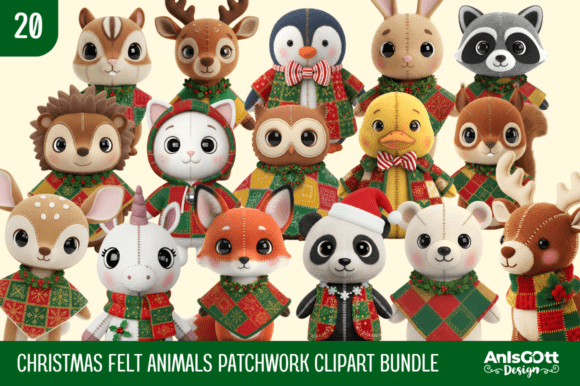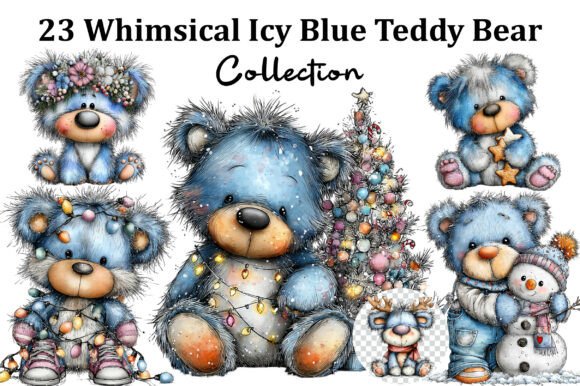
Christmas Patchwork Teddy Bear Clipart Illustrations
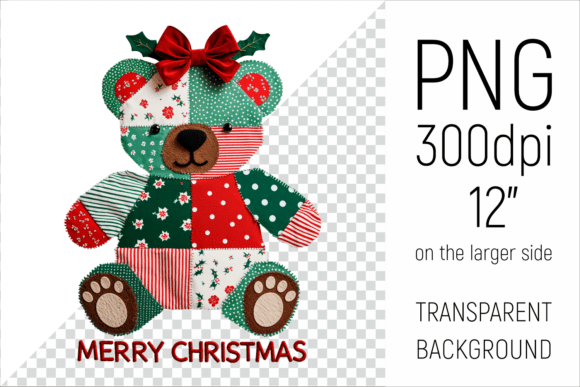
As a brand designer who spends half my day tweaking kerning and the other half worrying about whether a client’s packaging will survive the shipping process, I don’t just look at illustrations; I evaluate their utility. When I first pulled up Christmas Patchwork Teddy Bear Clipart, my immediate reaction was one of cautious optimism. It isn’t just a cute image; it is a strategic mood setter. The patchwork aesthetic immediately signals warmth, craftsmanship, and nostalgia. In a market saturated with sleek, minimalist vector bears or hyper-realistic 3D renders, this asset stands out by suggesting something handmade, curated, and deeply personal.
This specific illustration feels like it belongs in the hands of a local business owner who values story over scale. It evokes a rustic yet polished personality—perfect for a boutique that sells artisanal goods rather than mass-produced items. The texture implied by the patchwork design suggests fabric, comfort, and care, which translates directly to consumer trust. If you are running a small business branding project, you aren’t just selling a product; you are selling an experience. This clipart supports that narrative by adding a layer of tactile visual interest to digital and print materials alike.
The Mood and Brand Personality Fit
Before committing any design asset to a final layout, I always ask: what is the emotional resonance? Christmas Patchwork Teddy Bear Clipart creates a soft, festive, and inviting atmosphere. It is not bold or aggressive; it is gentle and decorative. This makes it ideal for brands that want to appear approachable and friendly without sacrificing elegance. It fits seamlessly into the visual language of home decor shops, children’s product brands, and seasonal gift campaigns.
For a local bakery, this bear could sit on a holiday cookie box, whispering "homemade" before the customer even reads the flavor list. For a skincare brand launching a winter set, it could accompany a label for a lavender sleep balm, reinforcing the idea of cozy self-care. The patchwork elements allow for color variations that can be adapted to various palettes, from traditional reds and greens to more modern pastels or monochromatic schemes. This versatility is crucial for small business branding, where consistency across different touchpoints builds recognition.
Real-World Applications in Packaging and Labels
In my recent work with a handmade soap business, we needed a hero graphic for their Christmas limited edition run. We tested several assets, but Christmas Patchwork Teddy Bear Clipart emerged as the clear winner for its ability to anchor the design without overwhelming it. Here is how this type of illustration performs in critical physical applications:
- Product Labels and Hang Tags: The detailed nature of the patchwork works beautifully on hang tags, where space is limited but impact needs to be high. It draws the eye and adds perceived value to the item.
- Packaging Accents: Use this as a decorative element on larger boxes. It breaks up solid colors and guides the customer’s eye toward the logo or product name, improving visual hierarchy.
- Stickers and Seals: Cut out the bear for use as a seal on wax envelopes or gift wrap. This small detail enhances the unboxing experience, which is vital for local business retention.
- Menu Graphics: For cafes offering holiday specials, this clipart can serve as a bullet point or section divider, making the menu feel more editorial and less transactional.
When designing for product packaging, remember that the asset must remain legible at small sizes. The patchwork lines need to be distinct enough to hold up when scaled down. Always test your design assets on actual mockups before sending files to print. A beautiful illustration that blurs into a gray blob on a tiny label is a wasted opportunity.
Elevating Marketing Visuals and Social Media
Beyond physical products, this illustration is a powerhouse for marketing visuals. In the digital space, where attention spans are fleeting, warm and nostalgic imagery stops the scroll. You can integrate this clipart into social media graphics for Instagram stories, Facebook ads, or Pinterest pins. It pairs exceptionally well with serif fonts for a classic look or handwritten fonts for a personal touch.
Consider using it in email marketing headers for holiday promotions. It sets the tone immediately, telling the subscriber that this is a special, time-sensitive offer. For web design, it can serve as a decorative background element or a featured icon on the homepage banner, adding character to an otherwise sterile grid. The key is balance. Let the illustration breathe. Don’t crowd it with too much text or competing graphical elements. Allow it to function as a focal point that reinforces your brand identity.
Strategic Considerations and Where to Exercise Caution
No single asset is perfect for every context. As a professional reviewer, I must highlight where Christmas Patchwork Teddy Bear Clipart might struggle. It is not suitable for formal corporate branding or luxury minimalist brands that rely on stark simplicity. The playful, textured nature of the patchwork design can clash with serious, high-end aesthetics.
Be careful when placing this asset on low-contrast backgrounds. If the bear has light-colored patches, it may disappear against a white or cream background. Ensure there is sufficient contrast to maintain readability and visual impact. Additionally, avoid using it in crowded layouts where important legal information or ingredient lists reside. The decoration should support the text, not compete with it. If you are designing for a very small label, such as a jar lid, the intricate details of the patchwork may become muddy. In such cases, consider simplifying the asset or using it only as a secondary accent.
Practical Designer Notes for Implementation
To get the most out of this illustration, follow these technical best practices:
- Check File Formats: Ensure you have both PNG and SVG versions if available. The PNG provides transparency for easy placement, while the SVG allows for scalability without quality loss, which is essential for large format prints.
- Test Color Adaptability: Import the asset into your design software and experiment with color overlays. Can you change the red patches to gold for a more elegant look? Versatility in color matching is a hallmark of a good graphic design asset.
- Review Typography Pairings: Test the clipart alongside your brand’s primary font. Does it clash with a rigid sans-serif? Does it harmonize with a flowing script? The right typography can elevate the illustration from a simple sticker to a cohesive brand element.
- Verify Commercial Licensing: Before using this in any commercial design project, confirm the license terms. Are you allowed to modify the colors? Is there a limit on the number of physical products you can produce? Clear licensing protects your business from legal issues.
- Print Quality Check: Always preview your design in black and white. If the patchwork patterns lose their definition without color, the design may not hold up in all printing scenarios.
Ultimately, Christmas Patchwork Teddy Bear Clipart is more than just a festive image; it is a tool for building emotional connections. By integrating it thoughtfully into your packaging design, social media graphics, and promotional materials, you create a cohesive and memorable brand experience. Whether you are a handmade seller looking to stand out at a craft fair or a local business aiming to boost holiday sales, this illustration offers the warmth and professionalism needed to succeed. Choose wisely, place strategically, and let the design do the heavy lifting for your brand story.